Social media has given female athletes a powerful platform to challenge stereotypes, inspire supporters and redefine sporting identity. However, does greater visibility necessarily lead to greater equality?
Sport as a Platform for Social Change
Sport has historically reflected wider societal attitudes towards gender, identity and equality. However, the emergence of digital media has transformed how these issues are communicated, challenged and experienced. Women’s football provides a prominent example, as platforms such as Instagram, TikTok and YouTube enable female athletes to challenge traditional stereotypes and establish direct relationships with supporters.
Despite these developments, increased visibility does not automatically eliminate inequality. Online discrimination, gender stereotypes and unequal commercial opportunities continue to influence the sporting experience.
This raises an important question: is digital media genuinely transforming gender equality in sport, or simply creating new environments in which existing inequalities are reproduced?
Digital Media: Challenging Traditional Gender Stereotypes
Historically, mainstream sports media has disproportionately prioritised men’s competitions. Cooky, Messner and Musto (2015) identify persistent inequalities in televised sports coverage, demonstrating how media representation can reinforce perceptions of male sporting dominance.
Digital platforms offer female athletes opportunities to challenge this imbalance by communicating directly with audiences without relying exclusively on traditional broadcasters.
The Lionesses provide a relevant example through their use of digital storytelling, behind-the-scenes content and athlete-led communication. These marketing approaches enable supporters to engage with players’ personalities, achievements and experiences beyond competitive performances.
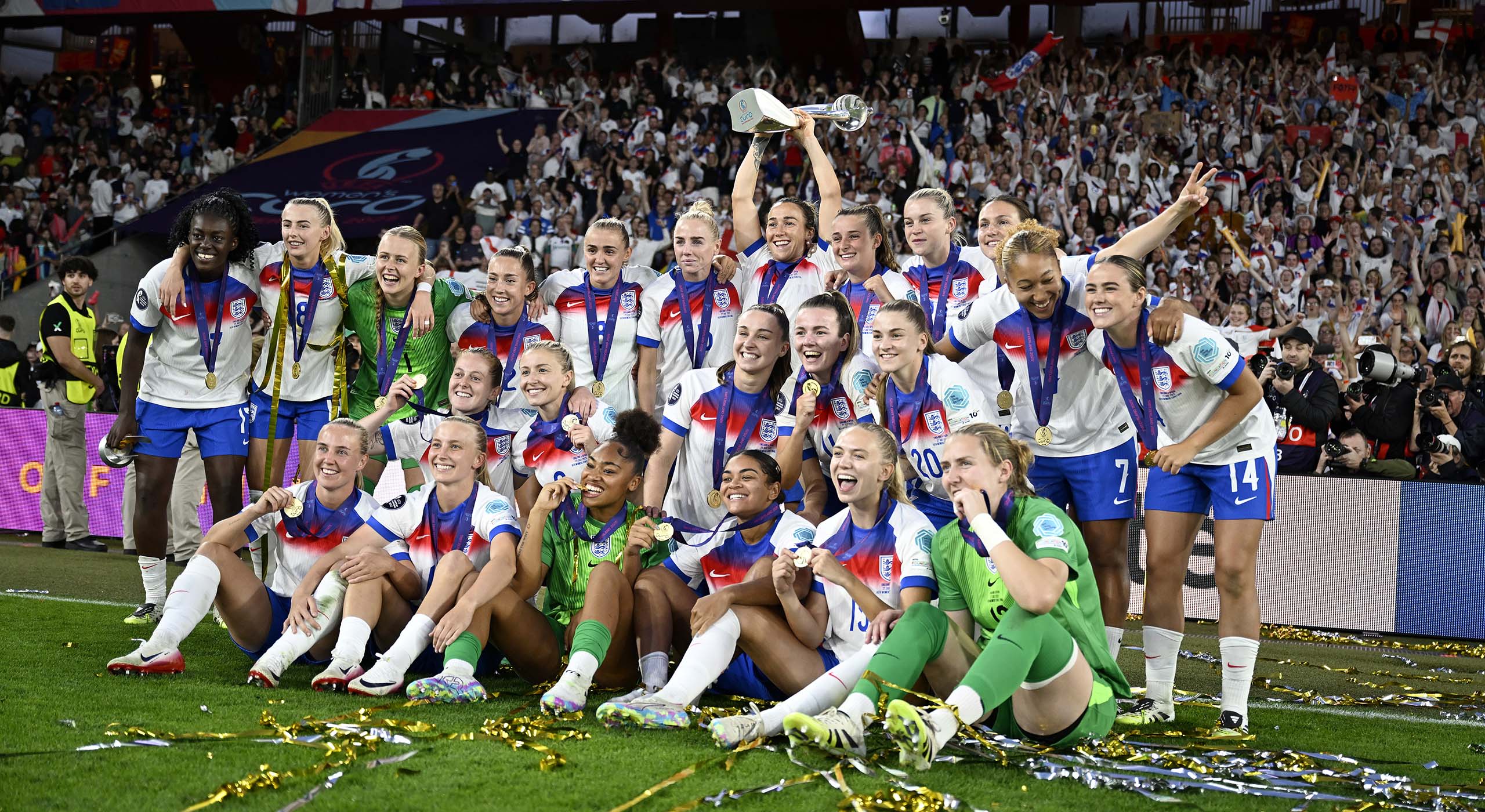
Nevertheless, greater visibility does not necessarily guarantee equal representation. Social media algorithms may favour commercially attractive personalities, potentially marginalising athletes with smaller followings.
Consequently, digital media can challenge traditional inequalities while simultaneously creating new hierarchies based on popularity and commercial appeal.
Sporting Identity: Representation, Belonging and Empowerment
Social Identity Theory suggests that individuals develop aspects of their identity through membership of social groups (Tajfel and Turner, 1979).
Within women’s football, increased digital representation allows supporters to develop emotional connections with athletes who reflect their values, aspirations and experiences.
For younger female supporters, seeing professional footballers celebrated online may challenge traditional perceptions of football as a male-dominated environment. This representation can encourage feelings of belonging and potentially inspire grassroots participation.
However, sporting identity is not solely determined by gender. Crenshaw’s (1989) concept of intersectionality demonstrates how overlapping social identities can produce different experiences of discrimination and inequality.
Female athletes from minority ethnic backgrounds or LGBTQ+ communities may therefore face additional barriers that broader campaigns promoting gender equality overlook.
For sports marketers, meaningful representation requires recognising the diversity of athletes and supporters rather than treating women as a single, homogeneous audience.

Online Abuse: The Hidden Cost of Digital Visibility
Although digital media creates opportunities for empowerment, it also exposes athletes to harmful public scrutiny.
Research conducted by FIFA and FIFPRO (2023) identified more than 150 players who experienced targeted abusive, discriminatory or threatening messages during the 2023 FIFA Women’s World Cup. The monitored content also revealed a higher relative incidence of verified abuse than during the 2022 men’s tournament.
These findings expose a contradiction within contemporary sports marketing. Platforms that increase athlete visibility and commercial opportunities can simultaneously undermine psychological wellbeing and personal safety.
However, comparisons between tournaments must acknowledge differences in audience size, monitoring practices and sporting contexts. The findings demonstrate a serious problem but should not be interpreted as a comprehensive measure of gender discrimination in football.
Online hostility can also negatively affect supporters, particularly those who identify with targeted athletes, potentially discouraging participation in digital sporting communities.
Therefore, sports organisations must prioritise safeguarding, effective moderation and supporter education alongside engagement and audience growth.
Commercialisation: Empowerment or Marketing Opportunity?
The increasing popularity of women’s football has encouraged organisations to position gender equality and empowerment within their marketing strategies.
Commercial partnerships can provide valuable investment, increase athlete recognition and strengthen the sustainability of women’s competitions.
However, the authenticity of equality-focused marketing must be critically examined. Carroll’s (1991) framework of corporate social responsibility emphasises that organisations hold ethical and social responsibilities alongside economic objectives.
Applied to women’s football, this suggests that brands promoting empowerment should demonstrate meaningful commitments through long-term sponsorship, grassroots investment and inclusive employment practices.
Without measurable action, equality-based campaigns risk becoming symbolic promotional strategies rather than mechanisms for sustainable social change.
Sports marketers should therefore evaluate success through both commercial performance and social outcomes, including accessibility, representation and participation.
Rethinking the Modern Sports Fan Experience
Digital media has enabled supporters to engage with women’s football beyond geographical boundaries, creating communities centred on shared interests, sporting identities and social values.
However, meaningful fan engagement requires more than increased viewing figures, followers and online interactions. Supporters must also feel represented, respected and safe within digital environments.
Sporting organisations should consequently develop inclusive communication strategies that encourage constructive participation while challenging discriminatory behaviour.
The quality of digital sporting communities should be considered equally important as their commercial reach.
Conclusion
Visibility Is Only the Beginning
Digital media has transformed women’s football by creating opportunities for representation, empowerment and supporter engagement. Nevertheless, persistent online discrimination and commercial inequalities demonstrate that visibility alone cannot achieve equality.
The future of responsible sports marketing depends on converting digital attention into meaningful social progress through authentic representation, sustainable investment and inclusive fan experiences.
Ultimately, the success of women’s football should be measured not only through its growing audiences but also through its ability to challenge inequality and create lasting opportunities for future generations.
References
Carroll, A.B. (1991) ‘The pyramid of corporate social responsibility: Toward the moral management of organisational stakeholders’, Business Horizons, 34(4), pp. 39–48. Available at: https://doi.org/10.1016/0007-6813(91)90005-G
Cooky, C., Messner, M.A. and Musto, M. (2015) ‘“It’s dude time!”: A quarter century of excluding women’s sports in televised news and highlight shows’, Communication & Sport, 3(3), pp. 261–287. Available at: https://doi.org/10.1177/2167479515588761
Crenshaw, K. (1989) ‘Demarginalizing the intersection of race and sex: A Black feminist critique of antidiscrimination doctrine, feminist theory and antiracist politics’, University of Chicago Legal Forum, 1989(1), pp. 139–167. Available at: https://chicagounbound.uchicago.edu/uclf/vol1989/iss1/8/
FIFA and FIFPRO (2023) FIFA Social Media Protection Service: Women’s World Cup 2023 tournament analysis. Available at: https://media.fifpro.org/media/nzqnlabp/fifa-fifpro-social-media-protection-service-report-2023-women-s-world-cup.pdf
Tajfel, H. and Turner, J.C. (1979) ‘An integrative theory of intergroup conflict’, in Austin, W.G. and Worchel, S. (eds.) The Social Psychology of Intergroup Relations. Monterey, CA: Brooks/Cole, pp. 33–47.

